English
 русский
 Español
 Deutsch
The service life of coolant pipes depends primarily on the material they are made from and the operating conditions they face. As a general guideline: rubber coolant hoses typically last 4 to 10 years or 60,000 to 100,000 miles (approximately 100,000 to 160,000 km), while rigid aluminium or steel coolant pipes can last 10 to 15 years or more under normal operating conditions. Silicone coolant hoses—used increasingly in performance and heavy-duty applications—can last 15 to 20 years, often outlasting the vehicle itself when properly maintained.
These are averages, not guarantees. Coolant pipes in vehicles that experience extreme temperatures, frequent towing, poor coolant maintenance, or harsh environmental exposure can fail significantly sooner. Understanding what determines coolant pipe lifespan—and how to identify deterioration early—is essential for preventing engine overheating, which remains one of the most expensive and damaging failure modes in any internal combustion engine.
Content
- 1 Service Life by Material Type
- 2 Key Factors That Shorten Coolant Pipe Service Life
- 3 How to Identify a Coolant Pipe Approaching End of Service Life
- 4 Replacement Intervals Recommended by Vehicle Type and Use
- 5 Coolant Maintenance: The Most Effective Way to Extend Pipe Life
- 6 Consequences of Coolant Pipe Failure and Why Early Replacement Pays
- 7 Practical Checklist for Maximising Coolant Pipe Service Life
Service Life by Material Type
Coolant pipes and hoses are manufactured from several different materials, each with distinct durability characteristics, strengths, and failure modes. Material type is the single largest determinant of expected service life.
Rubber Coolant Hoses (EPDM)
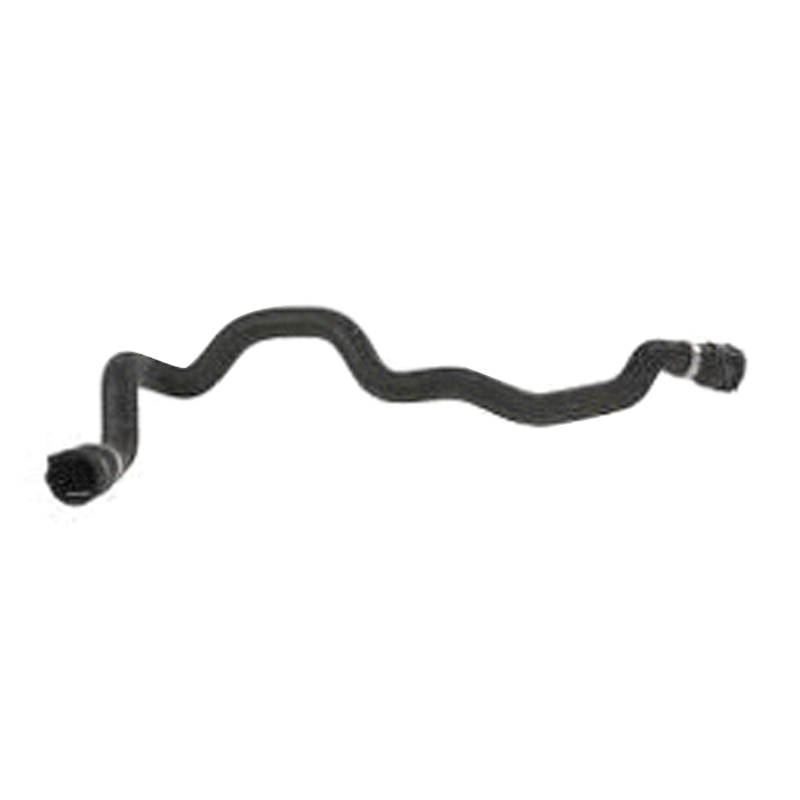
EPDM (Ethylene Propylene Diene Monomer) rubber is the dominant material for flexible coolant hoses in passenger vehicles. It offers good resistance to heat, ozone, and the glycol-water coolant mixture used in most vehicles. However, rubber degrades progressively through a process called electrochemical degradation (ECD)—a chemical reaction between the coolant and the hose's inner lining that creates microscopic cracks from the inside out. This internal degradation is invisible without cutting the hose open, which is why rubber hoses frequently fail without obvious external warning signs.
Expected service life: 4 to 10 years, with most manufacturers recommending inspection at 4 years and proactive replacement at 6 to 8 years regardless of external appearance.
Silicone Coolant Hoses
Silicone hoses are increasingly used as OEM and aftermarket upgrades in performance vehicles, trucks, and heavy-duty applications. Silicone is significantly more resistant to heat (withstanding continuous temperatures of up to 200°C / 392°F compared to approximately 125–150°C for standard EPDM) and does not suffer from electrochemical degradation to the same degree. Silicone also maintains flexibility across a wider temperature range, which reduces cracking in cold climates.
Expected service life: 15 to 20 years. The trade-off is higher upfront cost—silicone hoses typically cost 3 to 5 times more than equivalent EPDM hoses—and slightly lower pressure resistance, which may require attention to clamp selection.
Aluminium Coolant Pipes
Rigid aluminium pipes are used for coolant routing where flexibility is not required—typically in fixed runs between major components. Aluminium's primary vulnerability is corrosion, specifically galvanic corrosion when the coolant becomes acidic due to depleted inhibitors. Properly maintained coolant (replaced on schedule and pH-tested) allows aluminium pipes to last 10 to 20 years or more. Neglected coolant that becomes acidic can pit aluminium internally within 3 to 5 years, eventually causing pinhole leaks.
Steel and Cast Iron Coolant Passages
Internal coolant passages cast directly into the engine block and cylinder head are made from iron alloys. These passages are highly durable but susceptible to rust when coolant quality degrades. Rust formation inside iron passages reduces flow, clogs smaller passages, and can cause the head gasket to fail due to localised overheating. With correct coolant maintenance, cast iron passages typically last the life of the engine—200,000 miles (320,000 km) or more in well-maintained vehicles.
| Material | Typical Service Life | Max Continuous Temp. | Primary Failure Mode | Relative Cost |
|---|---|---|---|---|
| EPDM rubber | 4–10 years | 125–150°C | Electrochemical degradation, cracking | Low |
| Silicone | 15–20 years | up to 200°C | Clamp loosening, physical damage | High |
| Aluminium (rigid pipe) | 10–20+ years | Exceeds system limits | Galvanic/acid corrosion (pinhole leaks) | Moderate |
| Cast iron (engine passages) | Engine lifespan | Exceeds system limits | Internal rust / scaling | N/A (integral) |
Key Factors That Shorten Coolant Pipe Service Life
Even high-quality coolant pipes can fail well before their expected service life if exposed to conditions that accelerate degradation. Understanding these factors helps explain why identical vehicles can have very different coolant hose replacement histories.
Coolant Quality and Replacement Intervals
This is the most impactful maintenance variable. Coolant is not simply water and antifreeze—it contains a package of chemical inhibitors that protect rubber hoses from electrochemical degradation, protect metal components from corrosion, and buffer the pH of the system. These inhibitors are consumed over time. When depleted, coolant becomes acidic (pH dropping below 7), which dramatically accelerates attack on rubber hose linings and aluminium pipes.
Most vehicle manufacturers specify coolant replacement every 2 to 5 years or 30,000 to 60,000 miles (50,000 to 100,000 km), depending on coolant type. Long-life OAT (Organic Acid Technology) coolants may be rated for 5 years or 150,000 miles (240,000 km). Failing to replace coolant on schedule is the single most common cause of premature rubber hose and aluminium pipe deterioration.
Operating Temperature Extremes
Rubber hoses are most vulnerable to heat. Hoses located near the exhaust manifold, turbocharger, or other high-heat components experience sustained temperatures significantly above the coolant temperature itself, accelerating hardening and cracking. Vehicles that frequently tow heavy loads or operate in stop-and-go traffic—where the cooling system works continuously near its upper limit—place greater thermal stress on hoses than vehicles used primarily on highways at constant speeds.
Conversely, extreme cold causes rubber to stiffen and lose elasticity. In climates where temperatures regularly drop below -20°C (-4°F), standard EPDM hoses can become brittle, making them susceptible to cracking when disturbed or when subjected to pressure pulses during cold starts.
Pressure Cycling and Vibration
A vehicle cooling system operates under pressure—typically 13 to 16 psi (0.9 to 1.1 bar) in most passenger cars—to raise the boiling point of the coolant and prevent steam formation. Every engine start-up and shutdown cycles the system pressure from cold-ambient to operating pressure and back. Over years and hundreds of thousands of cycles, this pressure cycling fatigues the hose material, particularly at the ends where hoses connect to rigid fittings. Engine vibration compounds this fatigue, particularly in high-performance or diesel engines with greater vibration amplitude.
Oil and Chemical Contamination
Rubber hoses exposed to oil leaks, power steering fluid, or other petroleum-based fluids on their outer surface will degrade significantly faster than hoses in a clean engine bay. Most rubber compounds used in automotive hoses are not resistant to petroleum-based oils. A hose with surface oil exposure can become soft, swollen, and structurally weak within 12 to 24 months, regardless of its age in service. Keeping the engine bay clean and addressing oil leaks promptly is therefore a direct contributor to coolant hose longevity.
How to Identify a Coolant Pipe Approaching End of Service Life
Because the most dangerous failure mode—internal electrochemical degradation in rubber hoses—is invisible without physically cutting the hose, regular tactile and visual inspection is essential. Inspecting coolant hoses takes less than five minutes and should be part of every routine service visit.
Physical Inspection Techniques
- Squeeze test — with the engine cold, firmly squeeze the hose along its length. A healthy hose feels firm yet slightly flexible. A hose that feels rock-hard and unyielding is over-hardened and brittle; a hose that feels very soft, spongy, or collapses under light pressure has internal degradation and should be replaced immediately.
- End inspection — check the hose where it connects to metal fittings; this is the highest-stress zone. Look for surface cracking, mushrooming (swelling of the hose end), or hardened, brittle material at the clamp area.
- Surface crack check — visually inspect the outer surface of the hose for hairline cracks, particularly on bends and curves where the material is under constant flexural stress. Surface cracks that penetrate the hose wall allow coolant seepage and are a definitive replacement indicator.
- Swelling or ballooning — any section of hose that appears visibly larger in diameter than adjacent sections has a weakened wall; the internal pressure is causing the weakened area to expand and the hose is at risk of bursting under full operating pressure.
- Oil or coolant residue — greenish, orange, or pink staining on the hose outer surface or on components below the hose indicates a slow leak at a hose end, fitting, or pinhole; even a slow leak will progress to a major failure under operating temperature and pressure.
Coolant System Warning Signs
Warning signs from the vehicle itself that indicate potential coolant pipe problems include:
- Rising coolant temperature gauge or overheating warning light — indicates reduced coolant flow due to a collapsed hose, blockage, or significant leak reducing system pressure
- Sweet smell from the engine bay — ethylene glycol antifreeze has a distinctive sweet odour; detecting this smell without seeing obvious puddles suggests a slow internal or small external leak
- Coolant reservoir level dropping repeatedly — if the reservoir requires topping up more than once between services, coolant is leaving the system through a leak that may not yet be large enough to form visible puddles
- White smoke from the exhaust — coolant entering the combustion chamber (often a head gasket failure triggered by overheating caused by a coolant pipe failure) produces distinctive white steam from the exhaust
Replacement Intervals Recommended by Vehicle Type and Use
Recommended replacement intervals for coolant hoses vary by vehicle category, operating conditions, and hose material. The following table provides practical guidance across common vehicle types:
| Vehicle / Application | Hose Material | Inspection Interval | Proactive Replacement |
|---|---|---|---|
| Passenger car, normal use | EPDM rubber | Every 2 years / 30,000 km | 6–8 years or at first sign of deterioration |
| Passenger car, extreme climate | EPDM rubber | Annually | 4–6 years |
| Light truck / SUV with towing | EPDM rubber | Annually | 5–7 years |
| Performance / modified vehicle | Silicone | Every 3–5 years | 15–20 years (condition-based) |
| Heavy commercial vehicle | EPDM or silicone | Every 6–12 months | 3–5 years (high cycle count) |
| Industrial / stationary engine | EPDM or silicone | Annually | Per manufacturer specification |
Coolant Maintenance: The Most Effective Way to Extend Pipe Life
Because degraded coolant chemistry is the primary mechanism through which rubber hoses and aluminium pipes deteriorate prematurely, maintaining coolant quality is the highest-impact action a vehicle owner can take to extend coolant pipe service life. This is more cost-effective than simply replacing hoses on a fixed schedule while ignoring coolant condition.
- Replace coolant on the manufacturer's schedule — do not extend coolant change intervals beyond the specified limit. Inhibitor depletion is invisible and cannot be reversed by topping up; only a full drain and refill restores inhibitor protection.
- Use the correct coolant type for the vehicle — mixing incompatible coolant types (e.g., OAT and HOAT) causes inhibitor chemistry to react and form deposits that block passages and accelerate corrosion. Always check the vehicle manufacturer's specification before adding coolant.
- Use distilled or deionised water when diluting coolant concentrate — tap water contains minerals (calcium, magnesium, chlorides) that deposit scale inside the cooling system, reduce heat transfer, and promote corrosion. Premixed coolant (50/50) eliminates this risk.
- Test coolant pH annually — inexpensive coolant test strips can measure pH in 30 seconds. Coolant pH should be between 7.5 and 11 for most vehicle types; a reading below 7 indicates the coolant has become acidic and must be replaced immediately.
- Check freeze and boil protection at the same time — a refractometer or hydrometer measures the antifreeze concentration in the coolant, confirming it provides adequate protection for the local climate. A 50% ethylene glycol concentration provides freeze protection to approximately -37°C (-34°F) and raises the boiling point to approximately 106°C (223°F) at standard pressure.
- Flush the system when changing coolant — a system flush removes scale deposits, rust particles, and degraded coolant residue before new coolant is added, restoring full flow capacity and preventing contamination of the fresh coolant by residual acid or corrosion products.
Consequences of Coolant Pipe Failure and Why Early Replacement Pays
A failed coolant pipe allows coolant to escape the system, causing the engine to lose temperature regulation. The cascade of consequences from even a brief overheating event can be severe and expensive—far exceeding the cost of a proactive hose replacement.
The damage hierarchy from coolant pipe failure and subsequent overheating typically progresses as follows:
- Stage 1 — Coolant loss and rising temperature: a hose leak or burst causes rapid coolant loss; the temperature gauge rises toward the red zone within minutes
- Stage 2 — Head gasket stress: at temperatures above approximately 120°C (248°F), aluminium cylinder heads expand faster than cast iron blocks, placing extreme stress on the head gasket; head gasket failure requires significant repair work
- Stage 3 — Cylinder head warping: sustained overheating above 130–140°C can permanently warp an aluminium cylinder head, requiring resurfacing or replacement
- Stage 4 — Catastrophic engine failure: if coolant is entirely lost and the engine continues running, seizure of pistons, crankshaft, or camshaft bearings can occur within minutes, requiring complete engine replacement
A set of replacement EPDM coolant hoses for a typical passenger car costs between £20 and £100 (approximately $25 to $130 USD) in parts. A head gasket replacement on the same vehicle typically costs £600 to £1,500 ($750 to $1,900 USD) in labour and parts, while engine replacement can reach £3,000 to £8,000 ($3,800 to $10,000 USD) or more. The cost-benefit case for proactive coolant pipe inspection and timely replacement is unambiguous.
Practical Checklist for Maximising Coolant Pipe Service Life
The following actions, applied consistently, will maximise the service life of coolant pipes and minimise the risk of cooling system failure:
- Inspect all coolant hoses at every oil change — squeeze, visually check for cracks and swelling, check clamp condition
- Replace coolant on schedule — never exceed the manufacturer's coolant change interval; test pH annually with inexpensive test strips
- Use the correct coolant specification — check the owner's manual and never mix incompatible coolant types
- Address oil leaks promptly — oil on rubber hoses accelerates deterioration; keep the engine bay clean
- Replace hoses proactively at 6 to 8 years (EPDM) — do not wait for visible failure; internal degradation is invisible until the hose bursts
- Replace clamps whenever hoses are replaced — reusing old clamps risks leaks at new hose fittings; worm-drive stainless clamps are preferred over OEM spring clamps for longevity
- Monitor the coolant temperature gauge during normal driving — any sustained deviation from the normal mid-gauge position warrants immediate investigation before overheating causes damage
- Consider silicone hose upgrades for high-demand applications — vehicles used for towing, track days, or operating in extreme climates benefit significantly from silicone hoses' superior temperature resistance and extended service life