English
 русский
 Español
 Deutsch
The primary function of an oil filter is to continuously remove harmful contaminants from engine oil as it circulates through the lubrication system — trapping dust, metal particles, carbon deposits, soot, and other debris before they can reach critical engine components. By keeping the oil clean, the filter prevents abrasive wear on bearings, pistons, and cylinder walls; reduces corrosion and sludge buildup; and ensures that moving engine parts receive consistent, high-quality lubrication under all operating conditions. Without a functioning oil filter, even fresh oil becomes a carrier of damaging particles within a short period of operation.
Content
- 1 Why Engine Oil Becomes Contaminated During Normal Operation
- 2 The Five Core Functions of an Oil Filter
- 3 How an Oil Filter Works: Internal Components and Mechanisms
- 4 Types of Oil Filters and Their Differences
- 5 Consequences of a Neglected or Failed Oil Filter
- 6 Oil Filter Replacement Intervals: When and Why to Change
Why Engine Oil Becomes Contaminated During Normal Operation
Understanding what the oil filter is protecting against helps explain why it is indispensable. Engine oil does not simply stay clean as it circulates — it picks up contaminants from multiple sources during every operating cycle.
- Metal wear particles: Every time two metal surfaces move against each other — piston rings against cylinder walls, bearing journals against crankshaft surfaces — microscopic metal fragments are abraded away. These particles are suspended in the oil and, if not removed, act as abrasives that accelerate wear exponentially
- Combustion byproducts: Incomplete combustion produces soot and carbon particles that blow past the piston rings into the crankcase — a process called blowby. These carbonaceous particles are carried into the oil and contribute to sludge formation if not filtered out
- External dust and dirt: Airborne particles enter the engine through the air intake and past imperfect seals. Even with an air filter in place, fine dust particles reach the oil over time
- Oxidation and degradation products: Engine oil itself degrades chemically at high temperatures, forming acidic compounds, varnish, and insoluble oxidation products that contaminate the lubricating medium if left unfiltered
- Coolant and fuel contamination: Minor coolant or fuel dilution of the oil — from worn seals or incomplete combustion — introduces water and unburned fuel that degrade oil viscosity and promote bacterial growth and corrosion
Research by engine manufacturers has shown that particles in the size range of 10 to 40 micrometers are the most damaging to engine bearings and valve train components — precisely the size range that oil filter media is designed to capture most effectively.
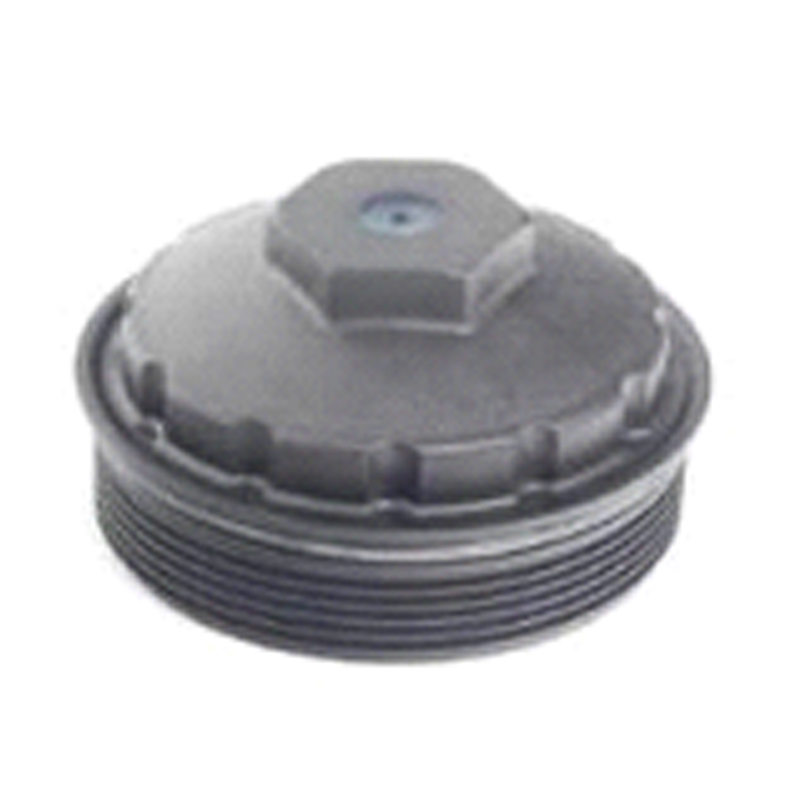
The Five Core Functions of an Oil Filter
Contaminant Removal and Engine Protection
The filter element — typically pleated cellulose, synthetic fiber, or a combination of both — physically traps particles as oil is forced through it under pressure from the oil pump. Quality full-flow oil filters capture particles down to 25–40 micrometers in standard configuration, while high-performance synthetic media filters capture particles as small as 15–20 micrometers with high efficiency. Every contaminant trapped in the filter media is a particle that will not reach the precision-machined clearances of crankshaft bearings (typically 0.025–0.075mm) where it would cause direct abrasive damage.
Maintaining Oil Viscosity and Lubrication Quality
Suspended particles alter the rheological properties of engine oil — increasing effective viscosity in ways that are difficult to predict and that resist correction by viscosity modifiers. By continuously removing these particles, the oil filter helps the oil maintain its designed viscosity grade and flow characteristics throughout its service life. Consistent viscosity means consistent oil film thickness on bearing surfaces — the fundamental mechanism by which oil prevents metal-to-metal contact.
Reducing Engine Wear Rate
The relationship between oil cleanliness and engine wear rate is well-documented. Studies in tribology (the science of friction, lubrication, and wear) consistently demonstrate that reducing particle concentration in lubricating oil by 50% can reduce bearing wear rates by 30–50%. The oil filter is the primary mechanism for maintaining particle concentration below the threshold at which accelerated wear occurs. Engines operating with degraded or absent filters show measurably higher rates of bearing, piston ring, and cylinder wall wear across every measured metric.
Preventing Sludge Formation and Deposit Buildup
Engine sludge — a thick, tar-like deposit that accumulates in oil passages, galleries, and on internal surfaces — is formed when oil oxidation products, combustion byproducts, and water combine at high temperature. Once sludge deposits restrict oil flow in small passages and galleries, critical components such as variable valve timing actuators, oil jets, and turbocharger bearings are starved of lubrication. The oil filter removes the insoluble precursors to sludge formation before they can accumulate, significantly slowing the sludge deposition rate and keeping oil passages clear.
Supporting Consistent Engine Performance and Fuel Efficiency
An engine running on clean, properly lubricated oil operates with lower internal friction than one running on contaminated oil. Lower friction means less energy wasted overcoming mechanical resistance — translating directly into better fuel efficiency and more consistent power output. Engine manufacturers' testing has demonstrated that maintaining oil cleanliness within specification can contribute to fuel economy improvements of 1–3% compared to running the same engine with degraded, contaminated oil.
How an Oil Filter Works: Internal Components and Mechanisms
A modern spin-on oil filter contains several components beyond the filter media itself, each serving a specific protective function.
| Component | Function | Why It Matters |
|---|---|---|
| Filter media (pleated element) | Traps particles as oil passes through | Primary filtration function — particle capture efficiency determines protection level |
| Anti-drain-back valve | Prevents oil draining back from filter when engine is off | Ensures oil pressure builds immediately on startup — prevents dry running of bearings during cold start |
| Bypass (relief) valve | Opens when filter is clogged or oil is very cold and thick | Allows unfiltered oil to bypass the element rather than starving the engine of lubrication entirely |
| Center tube | Structural support for filter media; oil exit channel | Maintains media geometry under pressure; directs filtered oil back to engine |
| Outer seal / gasket | Creates oil-tight seal between filter and engine block | Prevents oil leaks under operating pressure; must be replaced with every filter change |
The Bypass Valve: A Critical Safety Feature
The bypass valve deserves particular attention because it represents an important design trade-off. When the filter media becomes severely clogged, or when very cold, thick oil is pumped at startup before it warms and thins, the pressure drop across the filter can exceed the bypass valve's opening threshold — typically 0.6 to 1.0 bar (9–15 psi). At this point, the valve opens and allows oil to flow directly to the engine without passing through the filter media.
This means the engine receives unfiltered oil rather than no oil at all — a necessary compromise that prevents catastrophic engine failure from oil starvation. However, it underscores the importance of changing the oil filter at the manufacturer's recommended interval: a filter operating in bypass mode provides no contamination protection.
Types of Oil Filters and Their Differences
Several oil filter designs are used across different vehicle types and applications, each with distinct operating principles and performance characteristics.
- Full-flow (primary) filter: The standard design used in virtually all passenger vehicles. All engine oil passes through this filter on every circuit — it must balance high dirt-holding capacity with low flow restriction to avoid pressure drop issues. Full-flow filters capture large volumes of particles but may allow the finest sub-20μm particles to pass through
- Bypass filter: A supplementary filter connected in parallel to the main oil circuit, through which only a small fraction (typically 10–15%) of oil flow is routed. Because only a small flow passes through, bypass filters can use very fine filter media — capturing particles as small as 2–5 micrometers — without creating problematic restriction in the main lubrication circuit. Used in heavy-duty diesel engines and extended drain interval applications
- Combination (full-flow/bypass) filter: Integrates both full-flow and bypass filtration in a single housing — providing both high-volume particle capture and ultra-fine polishing filtration in one unit
- Cartridge (element-style) filter: A replaceable filter element housed in a fixed canister attached to the engine block. The housing remains on the vehicle; only the paper or synthetic element is replaced at service intervals. More environmentally friendly than spin-on filters as less metal waste is generated per service interval
- Magnetic filter / chip detector: Contains permanent magnets that attract and retain ferrous metal particles from the oil — used as a supplement to media filtration in aviation, marine, and high-performance applications where early detection of unusual metal wear is critical
Consequences of a Neglected or Failed Oil Filter
The consequences of operating an engine with a clogged, failed, or absent oil filter are progressive and cumulative — starting with accelerated wear and eventually leading to serious engine damage if not addressed.
- Accelerated bearing wear: Metal particles circulating in oil act as a grinding compound against precision bearing surfaces. Bearing clearances increase, oil pressure drops, and the characteristic "knocking" sound of worn main or rod bearings begins — often indicating damage that requires engine rebuilding
- Cylinder wall and piston ring wear: Abrasive particles scoring cylinder walls cause increased blowby, higher oil consumption, loss of compression, and reduced power output — all symptoms of an engine that has suffered sustained contamination damage
- Oil gallery and passage blockage: Sludge and deposits accumulate in narrow oil passages, restricting flow to turbocharger bearings, camshaft journals, variable valve timing components, and piston cooling oil jets — components that depend on full oil flow for survival
- Turbocharger failure: Turbocharger shaft bearings spin at speeds up to 200,000 RPM and depend entirely on clean, pressurized oil for lubrication and cooling. Contaminated or restricted oil flow is the leading cause of premature turbocharger failure — a repair that typically costs several times more than the vehicle's entire scheduled maintenance history
- Catalytic converter and emissions system damage: Engine wear accelerated by poor oil filtration increases oil consumption and blowby, introducing oil-derived compounds into the exhaust stream that poison catalytic converter catalysts and damage oxygen sensors
Oil Filter Replacement Intervals: When and Why to Change
An oil filter should always be replaced at every oil change — the two are inseparable maintenance items. Installing fresh oil into an engine with a used filter immediately begins contaminating the new oil with particles trapped in the old media, and risks the filter operating in bypass mode if it is already at capacity.
Standard replacement intervals for most passenger vehicles are every 5,000 to 10,000 km with conventional oil, and every 10,000 to 15,000 km with full synthetic oil — always following the vehicle manufacturer's specification. Vehicles used in severe service conditions — short trips, dusty environments, towing, or high-performance driving — benefit from shorter intervals because these conditions accelerate both oil and filter degradation.
Given that oil filter replacement costs a small fraction of the engine repair costs it prevents, regular oil filter changes represent one of the highest-return maintenance investments available for any internal combustion engine vehicle.