English
 русский
 Español
 Deutsch
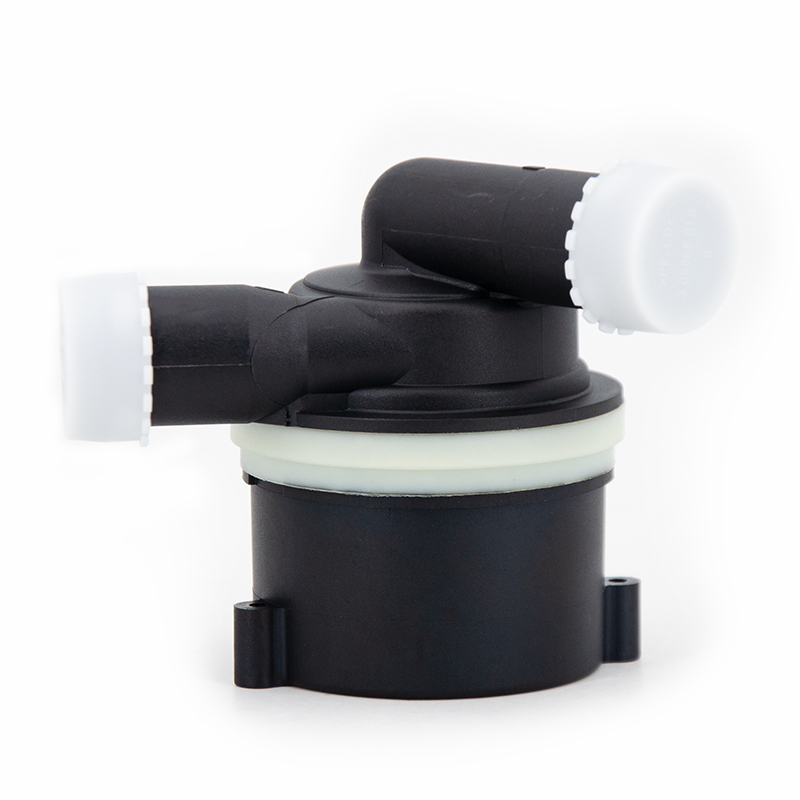
An auxiliary pump — most commonly an auxiliary water pump in automotive applications — serves the primary purpose of increasing coolant flow pressure and ensuring continuous, smooth circulation of coolant throughout the vehicle's cooling system, particularly in situations where the main mechanical water pump cannot deliver sufficient flow on its own. By maintaining adequate coolant movement through the engine block, cylinder head, heater core, and radiator, the auxiliary pump plays a crucial role in preventing engine overheating, protecting engine components from thermal damage, extending engine service life, and improving the overall reliability of the vehicle's thermal management system. It is an essential component in modern turbocharged engines, hybrid and electric vehicles, and any application where auxiliary cooling circuits must operate independently of engine speed.
Content
- 1 The Core Purpose: Maintaining Coolant Circulation When the Main Pump Cannot
- 2 How the Auxiliary Pump Works: Pressure, Flow, and Heat Transfer
- 3 Types of Auxiliary Pumps and Their Specific Purposes
- 4 Preventing Engine Overheating: The Most Critical Purpose
- 5 Auxiliary Pump Importance in Hybrid and Electric Vehicles
- 6 Signs of Auxiliary Pump Failure and Why Prompt Attention Matters
The Core Purpose: Maintaining Coolant Circulation When the Main Pump Cannot
In a conventional engine cooling system, the main water pump is mechanically driven by the engine crankshaft via a belt. This design links coolant flow rate directly to engine speed — the pump circulates more coolant at high engine RPM and less at low RPM or idle. While adequate for steady-state operation, this arrangement creates thermal management gaps in specific operating conditions where heat generation does not correspond to engine speed.
The auxiliary pump fills these gaps by providing electrically driven, independently controlled coolant flow that does not depend on engine speed or even engine operation. Its core purposes include:
- Post-shutdown turbocharger cooling: After a turbocharged engine is switched off, the turbocharger — which may have been spinning at up to 200,000 RPM at operating temperatures exceeding 900°C — continues to radiate heat into the oil and coolant passages surrounding it. The main pump stops with the engine, but the auxiliary pump continues circulating coolant through the turbo cooling circuit for several minutes after shutdown, preventing the heat soak that would otherwise cause oil coking and bearing damage inside the turbocharger
- Low-speed and idle cooling supplementation: At idle, the mechanical pump generates relatively low flow, which may be insufficient to manage heat in high-demand scenarios such as traffic queuing in hot weather with air conditioning running. The auxiliary pump supplements main pump flow at low engine speeds to maintain adequate coolant circulation through the entire system
- Engine-off cabin heating: In hybrid vehicles and vehicles with automatic stop-start systems, the engine is frequently switched off when the vehicle is stationary. The auxiliary pump maintains coolant circulation through the heater core to continue delivering cabin heat even when the engine is not running — maintaining passenger comfort without requiring the engine to restart
- Independent cooling circuit operation: In hybrid and electric vehicles, the battery pack, inverter, and electric motor require active liquid cooling that must function independently of the combustion engine. Auxiliary pumps drive these dedicated cooling circuits, maintaining component temperatures within safe operating ranges regardless of whether the combustion engine is running
How the Auxiliary Pump Works: Pressure, Flow, and Heat Transfer
The operating principle of an auxiliary water pump is straightforward but the thermal physics it enables are critical to engine protection. The pump draws coolant from the return side of the cooling circuit — where the coolant is cooler after passing through the radiator — and pressurizes it to push it through the engine's coolant passages at sufficient velocity to carry heat away from metal surfaces effectively.
Heat transfer from metal to coolant is governed by convective heat transfer physics — the rate of heat removal is proportional to the coolant flow velocity past the heated surface, the temperature difference between the surface and the coolant, and the thermal properties of the coolant itself. Without adequate flow pressure and velocity, coolant in contact with hot engine surfaces can locally boil, forming vapor pockets that dramatically reduce heat transfer efficiency and create hot spots that can cause head gasket failure, piston crown damage, and cylinder liner distortion.
By increasing coolant flow pressure — typically operating at 0.1 to 0.3 MPa delivery pressure in automotive auxiliary pump applications — the auxiliary pump ensures that coolant velocity remains high enough to prevent local boiling and maintain effective convective cooling throughout the circuit, even during the demanding post-shutdown and low-speed scenarios where the main pump would otherwise be inadequate.
The heated coolant, having absorbed thermal energy from the engine block and head, then flows to the radiator — where it transfers its heat load to the ambient air passing through the radiator core — before returning cooled to the pump inlet to begin the cycle again. The auxiliary pump sustains this continuous absorption-dissipation cycle at the times and in the circuits where it is most needed.
Types of Auxiliary Pumps and Their Specific Purposes
Auxiliary pumps are not limited to a single design or application — they are deployed in multiple configurations across different vehicle systems, each serving a specific thermal management or fluid circulation purpose.
| Auxiliary Pump Type | Primary Purpose | Typical Vehicle Application | When It Operates |
|---|---|---|---|
| Turbo cooldown auxiliary pump | Cool turbocharger after engine shutdown | Turbocharged petrol and diesel engines | 2–8 minutes post engine shutdown |
| Heater circuit auxiliary pump | Maintain cabin heat when engine is off | Hybrid vehicles, stop-start systems | During engine-off intervals with heating demand |
| Battery cooling pump (EV/HEV) | Cool battery pack and power electronics | Electric and hybrid vehicles | Continuously during charging and driving |
| Supplemental engine cooling pump | Boost coolant flow at low engine speed | High-performance and towing applications | Triggered by coolant temperature sensor |
| Transmission oil cooler pump | Circulate ATF through external oil cooler | Automatic transmission vehicles | High load / towing conditions |
Preventing Engine Overheating: The Most Critical Purpose
The most consequential purpose of the auxiliary pump is engine overheating prevention — a function whose importance becomes clear when the thermal limits of engine components are considered. Modern passenger vehicle engines are designed to operate with coolant temperatures between 85°C and 105°C. When coolant circulation becomes inadequate and temperatures rise above these limits, the consequences escalate rapidly with increasing severity.
- Above 110°C: Coolant approaches boiling point (in a pressurized system), vapor pockets form in cylinder head passages, localized hot spots develop, and engine oil begins to degrade at elevated temperature
- Above 120°C: Head gasket thermal stress increases dramatically — the differential expansion between the aluminum cylinder head and iron or steel block can crack the head gasket, causing coolant-oil mixing and loss of compression
- Above 130°C: Aluminum cylinder head distortion risk — aluminum alloys lose yield strength rapidly at elevated temperature, and head warpage causes permanent sealing surface damage requiring expensive machining or head replacement
- Severe overheating: Piston seizure, connecting rod bearing failure, and in extreme cases catastrophic engine failure requiring complete engine replacement — repair costs that can reach several thousand dollars
The auxiliary pump prevents this escalation by ensuring that coolant keeps moving through critical engine passages even in the scenarios — post-shutdown, low-idle, or independent circuit operation — where the mechanical pump cannot. The relatively low cost of an auxiliary pump replacement (typically $50–$200 for the component) represents an extraordinarily good investment against the catastrophic failure costs it prevents.
Auxiliary Pump Importance in Hybrid and Electric Vehicles
The growing prevalence of hybrid and electric vehicles has significantly expanded the role of auxiliary pumps in modern automotive thermal management. In these vehicles, the auxiliary pump is not a supplementary component — it is the primary active cooling mechanism for several of the most critical and expensive systems in the vehicle.
Battery Pack Temperature Management
Lithium-ion battery cells — used in all modern hybrid and electric vehicles — are extremely sensitive to temperature. Optimal battery performance and longevity requires cell temperatures to be maintained between 20°C and 40°C during operation and charging. Below this range, capacity and power output are reduced; above it, accelerated cell degradation occurs; significantly above it (above approximately 60°C), thermal runaway risk emerges. The auxiliary pump drives coolant through the battery thermal management circuit continuously during charging and driving to maintain cells within this critical temperature window — directly protecting the battery pack, whose replacement cost can represent 30–50% of the vehicle's total value.
Inverter and Power Electronics Cooling
The inverter — which converts DC battery power to AC motor power and vice versa during regenerative braking — generates substantial heat during high-power operation. Power semiconductor devices within the inverter typically have maximum junction temperatures of 150–175°C, and maintaining them below these limits requires effective liquid cooling that the auxiliary pump provides. Inverter failure due to thermal damage is one of the most expensive repairs in electric vehicle ownership, making the auxiliary pump's cooling function directly protective of a component worth thousands of dollars.
Signs of Auxiliary Pump Failure and Why Prompt Attention Matters
Because the auxiliary pump operates in specific conditions rather than continuously during all driving, its failure may not be immediately obvious — but the consequences of allowing it to remain faulty can be severe. Recognizing the signs of auxiliary pump failure allows timely intervention before expensive secondary damage occurs.
- Check Engine Light (CEL) activation: Modern vehicles monitor auxiliary pump operation through the ECU. A failed or underperforming auxiliary pump typically triggers a fault code (DTC) and illuminates the check engine light — the earliest and most reliable warning signal
- Overheating after engine shutdown: In turbocharged vehicles, steam or burning smell from the engine bay shortly after shutdown — or oil coking inside the turbocharger discovered during servicing — indicates that the post-shutdown coolant circulation provided by the auxiliary pump has been absent
- Loss of cabin heat when engine is off: In hybrid vehicles, the inability to maintain cabin temperature during engine-off intervals points to failure of the heater circuit auxiliary pump
- Battery temperature warnings in EVs: Persistent battery overtemperature warnings during charging or heavy driving may indicate auxiliary pump failure in the battery cooling circuit — a condition requiring immediate attention to protect the battery pack
- Audible pump noise changes: A failing auxiliary pump may produce unusual grinding, whining, or intermittent operation sounds detectable from the engine bay — indicating bearing wear or impeller damage that will progress to complete failure if not addressed