English
 русский
 Español
 Deutsch
A thermostat works by sensing temperature and automatically activating or deactivating a heating or cooling system to maintain a set target temperature. At its core, it is a temperature-controlled switch: when the measured temperature deviates from the desired setpoint, the thermostat triggers a corrective response — opening or closing a valve, circuit, or relay — until equilibrium is restored.
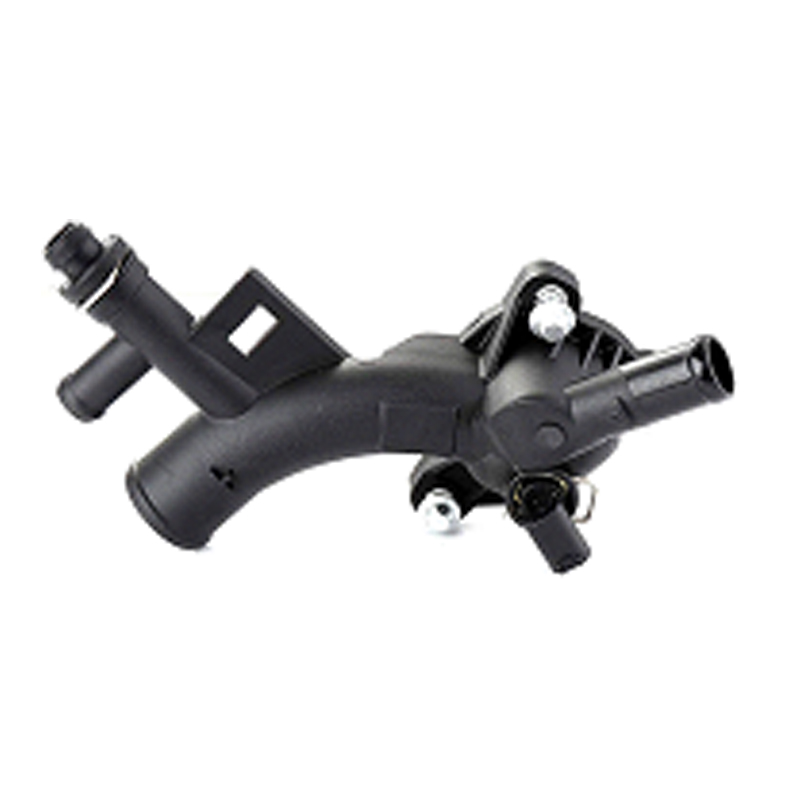
In engine cooling systems specifically, the thermostat regulates coolant flow between the engine block and the radiator. It ensures that the engine reaches its optimal operating temperature — typically 85°C to 105°C — as quickly as possible after a cold start, and then holds it within that range under varying load conditions.
Content
The Two Operating States of a Thermostat
Cold Engine: Small Circulation Loop
When the engine is cold and coolant temperature is below the thermostat's opening threshold (typically 80°C to 88°C), the main valve remains closed. Coolant circulates only through the engine block in a small loop, bypassing the radiator entirely. This allows the engine to reach operating temperature faster, reducing wear and fuel consumption during warm-up.
Warm Engine: Large Circulation Loop
Once coolant temperature reaches the opening threshold, the thermostat's main valve begins to open progressively. Hot coolant is now directed through the radiator, where airflow dissipates excess heat. The full valve opening is typically reached at 95°C to 105°C, allowing maximum coolant flow through the radiator to prevent overheating under heavy load.
The Wax Pellet Mechanism: How Temperature Moves the Valve
The most common thermostat design used in automotive and industrial cooling systems is the wax pellet thermostat. Inside the thermostat housing sits a sealed copper capsule filled with a specially formulated wax. Here is how it operates:
- At low temperatures, the wax is solid and compact. A spring holds the main valve closed against its seat.
- As coolant temperature rises, the wax absorbs heat and begins to melt, expanding in volume by approximately 10–15%.
- This expansion pushes a piston outward against a fixed rod, which forces the valve body away from its seat — opening the valve.
- When the engine cools, the wax re-solidifies and contracts. The spring pushes the valve back to the closed position.
This self-contained mechanical system requires no external power or sensors — it responds directly and proportionally to the coolant temperature surrounding it.
Types of Thermostats and Their Operating Principles
| Type | Sensing Mechanism | Typical Application |
|---|---|---|
| Wax pellet | Wax expansion/contraction | Automotive engine cooling |
| Bimetallic strip | Differential metal expansion | HVAC, household appliances |
| Electronic (NTC/PTC sensor) | Resistance change with temperature | Smart thermostats, modern HVAC |
| Electronic map-controlled | ECU signal + heating element | Modern automotive engines |
What Happens When a Thermostat Fails
Thermostat condition has a direct and serious impact on engine health. Failure modes fall into two categories with opposite consequences:
Thermostat Stuck Closed (Valve Opens Too Late)
If the valve fails to open at the correct temperature, coolant cannot flow to the radiator. Engine temperature rises beyond the normal range, leading to overheating, coolant boiling, gasket damage, and potentially catastrophic engine failure. This is the most dangerous failure mode and typically triggers the temperature warning light within minutes.
Thermostat Stuck Open (Valve Opens Too Early)
If the valve is permanently or prematurely open, coolant continuously flows through the radiator even when the engine is cold. The engine struggles to reach optimal operating temperature, resulting in prolonged warm-up times, increased fuel consumption, reduced oil viscosity effectiveness, and elevated emissions. The cabin heater will also underperform in cold weather.
Signs of a Failing Thermostat and When to Replace It
- Engine temperature gauge reads unusually high shortly after starting — suspect a stuck-closed thermostat.
- Engine takes excessively long to warm up even in mild weather — suspect a stuck-open thermostat.
- Temperature gauge fluctuates erratically between hot and cold — the valve may be opening and closing inconsistently.
- Poor cabin heating performance in winter — insufficient coolant temperature reaching the heater core.
- Increased fuel consumption without explanation — engine running below optimal temperature burns more fuel.
Most thermostat manufacturers recommend replacement every 5 years or 80,000–100,000 km, whichever comes first, as a preventive measure. Given that the part itself is low-cost and the labor is minimal when paired with a coolant flush, proactive replacement is sound maintenance practice.